Bookie

I’m your huckleberry.

Posted in Uncategorized | Leave a comment

Multitasking and Aversions

I always wanted a bookie, but in case any of my childhood “bookies” were an indication of their honesty and my Clockwork Orange aversion to violence, I’ve stayed away; have an honest/legal one?

Posted in Uncategorized | Leave a comment

Laughlin: Fixed Budget 2-3 Day Stay

Laughlin is also a nighttime town…bigtime.

Posted in Uncategorized | Leave a comment

BloombergRewind 07092012

@mattmiller Three old men and the three young men contemplating the economist powerbrokers & the recurrent theme “De-leveraging Sucks”.

Posted in Uncategorized | Leave a comment

At Home Again, 2001 Banking And Accounting Scandal Re-Dux: Moby Dick

Made-in-London Scandals Risk City Reputation as Money Center

By Kevin Crowley and Ambereen Choudhury – 2012-07-06T08:35:49Z
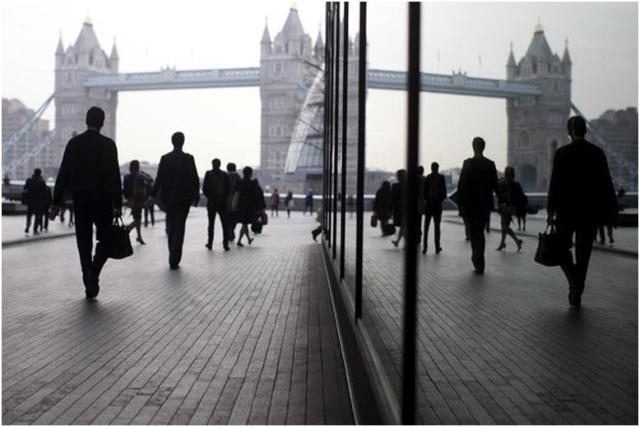

Simon Dawson/Bloomberg

Home to about 250 foreign banks, London is the world’s biggest center for foreign-exchange trading and cross-border bank lending and trades $1.4 trillion of interest derivatives daily.

London risks losing its status as the world’s top financial center as the $360 trillion interest-rate fixing probe follows a series of market abuses by banks that eroded trust in a city already shrinking faster than rivals.

JPMorgan Chase & Co. (JPM)‘s trading loss of at least $2 billion, the alleged $2.3 billion fraud at UBS AG (UBSN) and the investigation of at least a dozen banks including Barclays Plc (BARC) for rigging global interest rates all happened in London in the last year. The effect is taking a toll on the capital of a country enduring its first double-dip recession since the 1970s, which fired more financial-services workers than any other country in 2011 and again this year.

“My heart sinks every time there is a scandal and the perpetrators are in London, even if it is not always the U.K.’s responsibility, it is under our noses,” Sharon Bowles, chairwoman of the European Parliament’s economic and monetary affairs committee, said in an interview. “There is an effect on the U.K.’s reputation, and it reinforces the view that even after all the apologies there is much to do.”

London, ranked as the world’s number one financial center by research firm Z/Yen Group Ltd., was where American International Group Inc. (AIG) and Lehman Brothers Holdings Inc. booked transactions that helped lead to their downfall. This week saw Bank of England and U.K. government officials tied to the interest-rate fixing scandal that cost Robert Diamond, London’s best-known banker, his job at Barclays. With the European debt crisis on its doorstep, London now faces calls to cull its bonus culture, rein in risk-taking and beef up a light- touch regulatory system that fueled a decade-long boom.

Biggest Export

The danger for London is that Europe is preparing to set up its own regulator for banks, which may exclude the U.K. or disadvantage firms based in the city. Domestically, the industry is losing longstanding political support from both Conservative and Labour parties — as well as the public.

Home to about 250 foreign banks, London is the world’s biggest center for foreign-exchange trading and cross-border bank lending and trades $1.4 trillion of interest derivatives daily, according to the Bank for International Settlements. Financial services are the U.K.’s largest export and pays 12 percent of the country’s tax receipts.

‘Stark Reminder’

“It seems to be that every big trading disaster happens in London, and I would like to know why,” Representative Carolyn Maloney, a New York Democrat, said at a June 19 U.S. House Financial Services Committee hearing into the JPMorgan’s loss and the so-called London Whale trader.

AIG, Lehman Brothers and Bear Stearns & Co. all traded swaps in London that led to their bankruptcies or bailouts, Gary Gensler, chairman of the Commodity Futures Trading Commission, which is pushing the Libor investigation, said at the hearing.

“I think in the JPMorgan chief investment office matter, it’s really a stark reminder about how in derivatives trades booked offshore, risk can be brought back here,” Gensler said in a telephone interview yesterday. “And yes, they were booked in London, specifically in the branch of JPMorgan Chase’s bank, and those risks are very much a part of the bank here.”

Bank of England Governor Mervyn King said change is needed.

“Everyone now understands that something went very wrong with the U.K. banking industry,” he said at a news conference in London on June 29. “From excessive levels of compensation, to shoddy treatment of customers, to a deceitful manipulation of one of the most important interest rates, we can see that we need a real change in the culture of the industry.”

Expensive Bailout

The U.K. economy has suffered from losses made in its financial-services industry. Of the country’s nine largest banks, four were nationalized or forced to take state aid during the financial crisis, costing the country more money than any other project in history outside of world wars. The government is imposing the biggest budget cuts since the 1945, and unemployment is at 8.2 percent.

Barclays, having avoided a bailout along with HSBC Holdings Plc (HSBA) and Standard Chartered Plc (STAN), last week admitted manipulating Libor and will pay a record $451 million fine.

U.K. lawmakers from the country’s two main political parties united in their condemnation of Diamond’s failure to prevent his bank’s manipulation of Libor at a Treasury Select Committee hearing in London on July 4.

Diamond, who was Barclays’s chief executive officer until July 3, ran a “rotten, thieving bank,” John Mann of Labour said at a committee hearing a day later, while Conservative Andrea Leadsom accused him of living in a “parallel universe.”

Diamond Apologizes

Diamond, 60, apologized for his bank’s actions and described the behavior of “a small number” of traders as “reprehensible” at the hearing. The Massachusetts-born banker stepped down after earning about 120 million pounds ($186 million) since joining the board in 2005, according to proxy voting agency Manifest Information Services Ltd.

The market abuses come four years after the financial crisis in 2008, in which London played a key role. AIG’s financial-products division, which insured subprime mortgage bonds, was based in the city’s Mayfair district. Lehman booked transactions to move debt off its balance sheet through its London office in Canary Wharf, according to its bankruptcy examiner Anton Valukas. Bear Stearns made similar trades in London, Gensler said.

‘Quite Arrogant’

The Libor settlement followed earlier mis-steps with customers. U.K. banks including Barclays, Royal Bank of Scotland Group Plc and Lloyds Banking Group Plc (LLOY) have set aside 6.4 billion pounds in compensation to customers who were mis-sold insurance for loans. The banks last week agreed to repay small and medium-sized businesses improperly sold interest-rate derivatives following a probe by the U.K. financial regulator.

Diamond and JPMorgan CEO Jamie Dimon “are known to be quite arrogant, and to have lectured politicians for not understanding finance,” said Philippe Lamberts, a Belgian lawmaker in the European Parliament’s economic and monetary affairs committee. “Well, I won’t take lectures from these kinds of people any more. If there’s one thing they’ve demonstrated it’s their inability to run their businesses.”

The Bank of England, which will take on additional responsibility for regulation as well as being the country’s central bank, was implicated in the Libor fixing scandal this week when Barclays published an e-mail written by Diamond in 2008. Paul Tucker, an official at the bank, told Diamond in an October 2008 phone call the government perceived Barclays’s Libor rates to be “high,” the e-mail said.

Libor Survey

Tucker didn’t tell Barclays to reduce its submissions to the Libor rate-setting system, Diamond said July 4. The Bank of England declined to comment. Tucker has asked to testify in Parliament as soon as possible.

Eighteen banks are surveyed to determine Libor, a benchmark for more than $360 trillion of financial products globally. It is set by averaging out submissions in a poll of banks, who are asked how much it would cost them to borrow from each other for different periods of time.

U.K. Prime Minister David Cameron is dissolving the Financial Services Authority, which was created by Tony Blair‘s Labour government in 1997, and replacing it with two regulators run by the Bank of England. The Labour government’s commitment to light-touch regulation helped fuel the financial-services bubble, he has said.

Corruption Index

“In New York they have attorneys general who are dead keen on prosecuting people,” said Paul Moore, who was fired from his job as head of risk for HBOS Plc for warning the bank’s bosses that its growth plans could threaten its stability. HBOS almost collapsed in 2008 before it was bought by Lloyds.

“We never prosecute” in London, Moore said. “You can be a rioter and steal a water bottle and get put in prison, but if you are a director of a company that systematically mis-sells payment-protection insurance to people you can monetize it.”

The latest revelations may influence the U.K.’s ranking in the Corruption Perceptions Index, according to Chandu Krishnan, executive director at the U.K. arm of Transparency International, which produces the measure. The U.K. was the world’s 16th least corrupt nation in 2011, behind New Zealand at number one and ahead of the U.S. at number 22.

“It seems we haven’t learned enough from the problems in 2007 and 2008,” he said. “It’s hurting London’s reputation as a financial center.”

U.K. Cutbacks

The series of scandals haven’t yet impacted London’s ranking as the world’s top financial center ahead of New York, according to Mark Yeandle, senior consultant at Z/Yen Group, which compiles the list.

“The events could easily have taken place elsewhere and New York has not been free of scandal itself,” he said. “What could affect the perception of London’s competitiveness is how the regulators and legal authorities here deal with the guilty parties.”

Banks based in the city, which is hosting the Olympic Games this month, have fired 10,000 workers this year, almost half of the global total, according to data compiled by Bloomberg. U.K. banks cut almost a third of the 200,000 employees who lost their jobs last year.

“There’s a mood of significant introspection,” said Michael Kirkwood, 65, a board member of U.K. Financial Investments Ltd., which oversees the government’s stake in RBS and Lloyds and is former U.K. chairman of Citigroup Inc. (C) “People no longer hold their head up high when they have to say they are a banker.”

Banker Bonuses

The public aren’t sympathetic to the bankers’ plight.

“I understand talented people deserve bonuses,” said Walter Philippson, 47, who works as a courier in London’s financial district. “But we’ve seen that not everyone in the City is that good. Some simply don’t deserve it.”

Barclays’s investment banking unit paid employees an average of 203,750 pounds each in 2011, filings show. The figure includes salary, bonuses and pensions. That’s almost eight times the average U.K. salary of 26,000 pounds, according to the Office for National Statistics.

“The City is ruled by the elites, by people like Bob Diamond,” said Rose Wynes, 53, a social worker and mother of five in Westminster in Central London. “We’re being tricked, conned and played by them. We’re sheep.”

To improve the city’s ethos of making a quick profit at the expense of customers, investors and national economies, the U.K. government needs to insulate retail banking from trading activities, regulate derivatives and encourage banks to more evenly distribute profits between employees and shareholders, Kirkwood said.

More important than new rules is an attempt to change London bankers’ attitudes, according to Moore. “There’s a culture, not just in the investment banks, but also the retail banks, that needs to end,” he said. “The boil is rancid, and we need to lance it.”

To contact the reporters on this story: Kevin Crowley in London at kcrowley1@bloomberg.net; Ambereen Choudhury in London at achoudhury@bloomberg.net

To contact the editor responsible for this story: Edward Evans at eevans3@bloomberg.net

Enlarge image
Made-in-London Scandals Risk City Reputation as Money Center
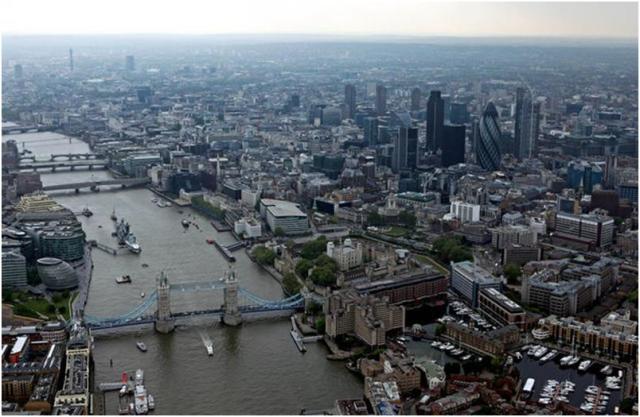

Chris Ratcliffe/Bloomberg

The Tower Bridge and the River Thames are seen in London.

The Tower Bridge and the River Thames are seen in London. Photographer: Chris Ratcliffe/Bloomberg

Enlarge image
Posted in Uncategorized | Leave a comment

Save Pamela Anderson from VIP Treatment Program

Save Pamela Anderson from VIP Investigation
Posted on July 6, 2012

The VIP loan treatment program of Countrywide Mortgage and others was a wicked device built out of cultural abnormalities (greed, power and so-called “independence”).

Posted in Uncategorized | Tagged | Leave a comment

Save Pamela Anderson from the VIPS

Fukushima Disaster Was Man-Made, Investigation Finds
By Tsuyoshi Inajima, Jacob Adelman and Yuji Okada – 2012-07-06T03:48:26Z

The Fukushima nuclear disaster was the result of “man-made” failures before and after last year’s earthquake, according to a report from an independent parliamentary investigation.

The breakdowns involved regulators working with the plant operator Tokyo Electric Power Co. to avoid implementing safety measures as well as a government lacking commitment to protect the public, the Fukushima Nuclear Accident Independent Investigation Commission said in the report.

The March 11 accident, which set off a wave of reactor safety investigations around the world, “cannot be regarded as a natural disaster,” the commission’s chairman, Tokyo University professor emeritus Kiyoshi Kurokawa, wrote in the report released yesterday in Tokyo. It “could and should have been foreseen and prevented. And its effects could have been mitigated by a more effective human response.”

The report dealt the harshest critique yet to Tokyo Electric (9501) and the government. The findings couldn’t rule out the possibility that the magnitude-9 earthquake damaged the Fukushima Dai-Ichi No. 1 reactor and safety equipment. This is a departure from other reports that concluded the reactors withstood the earthquake, only to be disabled when the ensuing tsunami slammed into the plant.

This finding may have implications for all Japan’s atomic plant operators if it leads to tougher earthquake-resistance standards. The operators reported combined losses of 1.6 trillion yen ($20 billion) in the year ended March owing to safety shutdowns of the country’s 50 reactors and higher fuel bills when they started up gas and oil-fired plants.
Earthquake’s Effect Disputed

If the Fukushima reactor had already been crippled by the quake when the tsunami hit, it would force regulators to reconsider the seismic criteria that all Japan’s plants need to follow, their so-called design basis, said Najmedin Meshkati, a professor of civil engineering at the University of Southern California who has researched nuclear safety in Japan.

“This finding basically puts into question some of the design basis assumptions that we have,” Meshkati said in a phone interview. “If this reactor got some damage because of the earthquake, we really need to go back and revisit some of our assumptions that we have for the design basis of other reactors.”

Two reactors run by Kansai Electric Power Co. won approval to restart this month, despite protests outside the prime minister’s office in Tokyo that drew as many as 20,000 people on June 29, Kyodo News reported, citing police estimates. A Mainichi newspaper poll on June 4 showed as many as 71 percent of Japanese opposed the restarts.
Ignorance, Arrogance

The report said the commission found evidence of “collusion” between Tokyo Electric and regulator, the Nuclear and Industrial Safety Agency, to avoid implementing new safety regulations.

Tokyo Electric also exploited its cozy relationship with regulators to take the teeth out of regulations. “Across the board, the Commission found ignorance and arrogance unforgivable for anyone or any organization that deals with nuclear power,” the report said.

The six-month independent investigation, the first of its kind with wide-ranging subpoena powers in Japan’s constitutional history, held public hearings with former Prime Minister Naoto Kan and Tokyo Electric’s ex-President Masataka Shimizu, who gave conflicting accounts of the disaster response.

Kan said he agreed with the finding that the disaster was man-made, though he differed with the reports findings on the government response, according to a posting on his official blog last night.
Contrary Finding

Three other investigations led by the government, the utility and a private foundation said in earlier reports that they found no evidence of major damage to reactor buildings and equipment at the Fukushima Dai-Ichi nuclear station from last year’s quake. They concluded the plant was swamped by a 13-meter (43 foot) tsunami that followed the quake, knocking out backup power generation and causing the meltdown of three reactors.

Radiation fallout from the reactors forced the evacuation of about 160,000 people and left land in the area uninhabitable for decades.

The Commission has 10 members, including Kurokawa. The group comprises a seismologist and a former nuclear engineer who has warned of safety risks at atomic plants and criticized the government’s nuclear energy policy.
Lacking Information

Mutsuhito Tanaka, a former nuclear equipment engineer at a unit of Hitachi Ltd. (6501) and a member of the commission, and Hiroaki Koide, an assistant professor at Kyoto University’s Research Reactor Institute, are among those who have said the quake may have caused more damage to the Fukushima plant than so far reported.

The commission’s report said the Fukushima situation was worsened by government mismanagement. The utility known as Tepco can’t use the government as a scapegoat as its own information disclosure through the disaster was lacking, the report said.

Japan’s parliament in December appointed Kurokawa, a doctor of medicine, to head the investigative panel.

Kurokawa clashed with the government when Prime Minister Yoshihiko Noda and his cabinet approved a bill on Jan. 31 to create a new nuclear regulatory agency.

“It is very hard to understand how the cabinet decision has been made” before the panel finishes its investigation, Kurokawa said in the statement. One of the panel’s missions is to make recommendations including the reexamination of Japan’s nuclear policy and administrative organizations to prevent a future atomic accident, Kurokawa said.
‘Regulatory Capture’

After amending the bill on the new regulator to give it more independence, the parliament passed the legislation on June 20. The new watchdog to be established as early as September, will replace the Nuclear Industrial Safety Agency and the Nuclear Safety Commission, two regulatory bodies criticized for their poor handling of the Fukushima disaster.

The Kurokawa report says the collusion between nuclear regulators and atomic plant operators led to what it called “regulatory capture,” a state in which oversight of the nuclear industry effectively ended.

“Outside Japan, some people will try to misuse this report to say it can’t happen here. The fact is that it can,” Arnie Gundersen, a U.S.-based former nuclear engineer and licensed reactor operator, said in an e-mail response.

“Here in the U.S., the industry basically forced out Gregory Jaczko as chair of the Nuclear Regulatory Commission,” Gundersen said, referring to the commission chairman who resigned amid criticism from the industry for pushing a faster agenda to toughen safety regulations after Fukushima.

“And of course, The International Atomic Energy Agency was in Japan for decades and never found these problems,” Gundersen said. “It’s a world-wide problem: the nuclear industry has taken control of the regulators.”

To contact the reporters on this story: Tsuyoshi Inajima in Tokyo at tinajima@bloomberg.net; Jacob Adelman in Tokyo at jadelman1@bloomberg.net; Yuji Okada in Tokyo at yokada6@bloomberg.net

To contact the editor responsible for this story: Peter Langan at plangan@bloomberg.net
Enlarge image Japan Atomic Disaster Called ‘Man-Made’ by Investigators
Japan Atomic Disaster Called ‘Man-Made’ by Investigators

Tomohiro Ohsumi/Bloomberg

The No. 1, from left, No. 2, No. 3 and No. 4 reactor buildings stand at Tokyo Electric Power Co.’s (Tepco) Fukushima Dai-Ichi nuclear power plant stands in Okuma Town, Fukushima Prefecture, Japan.

The No. 1, from left, No. 2, No. 3 and No. 4 reactor buildings stand at Tokyo Electric Power Co.’s (Tepco) Fukushima Dai-Ichi nuclear power plant stands in Okuma Town, Fukushima Prefecture, Japan. Photographer: Tomohiro Ohsumi/Bloomberg
Loan Treatment at Countrywide/Fannie Mae

Posted in Uncategorized | Tagged | Leave a comment

Regulators Captured Gundersen Says (Bloomberg L.P.)

Fukushima Disaster Was Man-Made, Investigation Finds

By Tsuyoshi Inajima, Jacob Adelman and Yuji Okada – 2012-07-06T03:48:26Z

The Fukushima nuclear disaster was the result of “man-made” failures before and after last year’s earthquake, according to a report from an independent parliamentary investigation.

The breakdowns involved regulators working with the plant operator Tokyo Electric Power Co. to avoid implementing safety measures as well as a government lacking commitment to protect the public, the Fukushima Nuclear Accident Independent Investigation Commission said in the report.

The March 11 accident, which set off a wave of reactor safety investigations around the world, “cannot be regarded as a natural disaster,” the commission’s chairman, Tokyo University professor emeritus Kiyoshi Kurokawa, wrote in the report released yesterday in Tokyo. It “could and should have been foreseen and prevented. And its effects could have been mitigated by a more effective human response.”

The report dealt the harshest critique yet to Tokyo Electric (9501) and the government. The findings couldn’t rule out the possibility that the magnitude-9 earthquake damaged the Fukushima Dai-Ichi No. 1 reactor and safety equipment. This is a departure from other reports that concluded the reactors withstood the earthquake, only to be disabled when the ensuing tsunami slammed into the plant.

This finding may have implications for all Japan‘s atomic plant operators if it leads to tougher earthquake-resistance standards. The operators reported combined losses of 1.6 trillion yen ($20 billion) in the year ended March owing to safety shutdowns of the country’s 50 reactors and higher fuel bills when they started up gas and oil-fired plants.

Earthquake’s Effect Disputed

If the Fukushima reactor had already been crippled by the quake when the tsunami hit, it would force regulators to reconsider the seismic criteria that all Japan’s plants need to follow, their so-called design basis, said Najmedin Meshkati, a professor of civil engineering at the University of Southern California who has researched nuclear safety in Japan.

“This finding basically puts into question some of the design basis assumptions that we have,” Meshkati said in a phone interview. “If this reactor got some damage because of the earthquake, we really need to go back and revisit some of our assumptions that we have for the design basis of other reactors.”

Two reactors run by Kansai Electric Power Co. won approval to restart this month, despite protests outside the prime minister’s office in Tokyo that drew as many as 20,000 people on June 29, Kyodo News reported, citing police estimates. A Mainichi newspaper poll on June 4 showed as many as 71 percent of Japanese opposed the restarts.

Ignorance, Arrogance

The report said the commission found evidence of “collusion” between Tokyo Electric and regulator, the Nuclear and Industrial Safety Agency, to avoid implementing new safety regulations.

Tokyo Electric also exploited its cozy relationship with regulators to take the teeth out of regulations. “Across the board, the Commission found ignorance and arrogance unforgivable for anyone or any organization that deals with nuclear power,” the report said.

The six-month independent investigation, the first of its kind with wide-ranging subpoena powers in Japan’s constitutional history, held public hearings with former Prime Minister Naoto Kan and Tokyo Electric’s ex-President Masataka Shimizu, who gave conflicting accounts of the disaster response.

Kan said he agreed with the finding that the disaster was man-made, though he differed with the reports findings on the government response, according to a posting on his official blog last night.

Contrary Finding

Three other investigations led by the government, the utility and a private foundation said in earlier reports that they found no evidence of major damage to reactor buildings and equipment at the Fukushima Dai-Ichi nuclear station from last year’s quake. They concluded the plant was swamped by a 13-meter (43 foot) tsunami that followed the quake, knocking out backup power generation and causing the meltdown of three reactors.

Radiation fallout from the reactors forced the evacuation of about 160,000 people and left land in the area uninhabitable for decades.

The Commission has 10 members, including Kurokawa. The group comprises a seismologist and a former nuclear engineer who has warned of safety risks at atomic plants and criticized the government’s nuclear energy policy.

Lacking Information

Mutsuhito Tanaka, a former nuclear equipment engineer at a unit of Hitachi Ltd. (6501) and a member of the commission, and Hiroaki Koide, an assistant professor at Kyoto University’s Research Reactor Institute, are among those who have said the quake may have caused more damage to the Fukushima plant than so far reported.

The commission’s report said the Fukushima situation was worsened by government mismanagement. The utility known as Tepco can’t use the government as a scapegoat as its own information disclosure through the disaster was lacking, the report said.

Japan’s parliament in December appointed Kurokawa, a doctor of medicine, to head the investigative panel.

Kurokawa clashed with the government when Prime Minister Yoshihiko Noda and his cabinet approved a bill on Jan. 31 to create a new nuclear regulatory agency.

“It is very hard to understand how the cabinet decision has been made” before the panel finishes its investigation, Kurokawa said in the statement. One of the panel’s missions is to make recommendations including the reexamination of Japan’s nuclear policy and administrative organizations to prevent a future atomic accident, Kurokawa said.

‘Regulatory Capture’

After amending the bill on the new regulator to give it more independence, the parliament passed the legislation on June 20. The new watchdog to be established as early as September, will replace the Nuclear Industrial Safety Agency and the Nuclear Safety Commission, two regulatory bodies criticized for their poor handling of the Fukushima disaster.

The Kurokawa report says the collusion between nuclear regulators and atomic plant operators led to what it called “regulatory capture,” a state in which oversight of the nuclear industry effectively ended.

“Outside Japan, some people will try to misuse this report to say it can’t happen here. The fact is that it can,” Arnie Gundersen, a U.S.-based former nuclear engineer and licensed reactor operator, said in an e-mail response.

“Here in the U.S., the industry basically forced out Gregory Jaczko as chair of the Nuclear Regulatory Commission,” Gundersen said, referring to the commission chairman who resigned amid criticism from the industry for pushing a faster agenda to toughen safety regulations after Fukushima.

“And of course, The International Atomic Energy Agency was in Japan for decades and never found these problems,” Gundersen said. “It’s a world-wide problem: the nuclear industry has taken control of the regulators.”

To contact the reporters on this story: Tsuyoshi Inajima in Tokyo at tinajima@bloomberg.net; Jacob Adelman in Tokyo at jadelman1@bloomberg.net; Yuji Okada in Tokyo at yokada6@bloomberg.net

To contact the editor responsible for this story: Peter Langan at plangan@bloomberg.net

Enlarge image

Japan Atomic Disaster Called ‘Man-Made’ by Investigators


Tomohiro Ohsumi/Bloomberg

The No. 1, from left, No. 2, No. 3 and No. 4 reactor buildings stand at Tokyo Electric Power Co.’s (Tepco) Fukushima Dai-Ichi nuclear power plant stands in Okuma Town, Fukushima Prefecture, Japan.

The No. 1, from left, No. 2, No. 3 and No. 4 reactor buildings stand at Tokyo Electric Power Co.’s (Tepco) Fukushima Dai-Ichi nuclear power plant stands in Okuma Town, Fukushima Prefecture, Japan. Photographer: Tomohiro Ohsumi/Bloomberg

Posted in Uncategorized | Leave a comment

October 1987: It happened here 2

In recent decades, the Hollywood area has experienced an economic decline, with large numbers of homeless and poor people living in the area. A low point for the parish came in October 1987, (month of stock market crash) when a gunman opened fire into a crowd of hundreds attending the church’s carnival, spraying the area with bullets.[9] Two adults and two children (a 15-year-old and a 9-year-old) were wounded in gunfire.[10] Blessed Sacrament Church, Sunset Boulevard, Hollywood, CA

Posted in Uncategorized | Leave a comment

Round up some VIPS (but not Val of “VIP”)

@raftofwater Then again, weren’t those “FERCS” at the cutting edge of the Enron debacle[ETF:Exch.Trd Fnds or Enron Task Force] & “Agencies”?  Re:  Edward Pinto’s appearance on Bloomberg TV’s “Insight” speaking of germination of influence peddling in 1996 U.S. Congress.  “Take it from me, suspension ain’t so bad.”

Posted in Uncategorized | Leave a comment