Chaim Witz was born August 25th 1949 in Haifa, Israel to Hungarian-Jewish parents. His mother Florence was a survivor of a Nazi concentration camp, and his father Chaim was a carpenter. Five years after his birth his parents separated, and when Chaim was only nine his mother brought him to live in the “Land of Opportunity” – the United States of America. Mother and son settled in Williamsburg, Brooklyn, New York. Understandably the move wasn’t easy for the boy newly renamed Gene Klein, as he couldn’t even speak the native language, let alone fit in with the culture.
As a child Gene was introduced to his first love – comic books and cartoons! After watching the documentary “Man of a Thousand Faces” about the legendary actor Lon Chaney Gene was infected with a passion for horror movies. With the help of these new interests, television commercials and Walt Disney movies, Gene picked up the English language – added to a vocabulary which also included Hebrew, Spanish, Turkish and Hungarian! After seeing the historic Beatles appearance on the Ed Sullivan Show in 1964 Gene’s life was changed. It would be in this, his fifteenth year, that his mother would give him a secondhand Kent guitar, which she purchased for $15.
“When I saw the Beatles on that program in 1964, I said, “Gee, y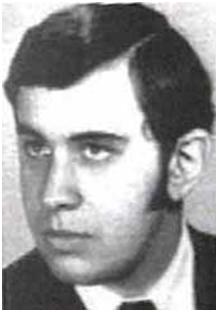 ou don’t have to get in line and do stuff like the Temptations, you can pick up a guitar and you don’t have to dance, you certainly don’t need a band in back of you, and anybody can do it.” – Guitar Player 1978
After three years of guitar playing Gene changed to the bass guitar because, as he saw it, there were far more guitarists in the world than bassists, and it would be easier to get into a band if he
played the bass. Also the instrument was more inkeeping with his personality, and the raw sounding attack of the bass excited him. By 1968 Gene had been in five separate musical groups: ‘Long Island Sounds’, ‘Rising Sun’, ‘The Missing Links’, ‘Bullfrog Bheer’ and ‘Cathedral’, entertaining at school functions and the occasional small club in New York.
While Gene completely surrounded himself with American culture, he never wasted his chance for
education, and in 1970 he graduated from Richmond College with a degree in education and four languages- English, German, Hungarian and Hebrew.
Having long decided against his childhood plan of becoming a Rabbi, Gene briefly worked as an sixth-grade school teacher in Spanish Harlem, but gave it up after he realised the children were against him. Gene also held a job as “Personal Assistant” to the editor of Vogue and Glamour magazines. Around this time the name ‘Gene Simmons’ was adopted as a stage name.
“I started teaching for the same reason as I started a band. I had a need to get up on the stage. Everyone needs the attention, but some more than others.” – Rolling Stone
In 1968 a Gene was to meet someone he would write musical history with. Stanley Eisen was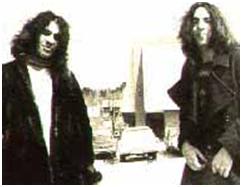 introduced to Gene by mutual friend Steve Coronel in Queens, New York. While at first they didn’t see eye to eye, before long a friendship was formed, and by 1970 Gene and ‘Paul Stanley’ began playing and writing music together. Their first group Rainbow soon became Wicked Lester, and after only several shows (playing all original music) they were signed by Epic Records on a one record deal. Wicked Lester* entered Electric Lady Studios in 1971 to record their debut album.
* Consisting of Gene (bass), Paul (guitar), Steve Coronel (guitar) Tony Zarella (drums) and Brooke Ostrander (keyboards).
After the experimental folk-sounding music was rejected by Epic, guitarist Steve Coronel left the band and was replaced by Ron Leejack. More recording sessions followed, only to be once again rejected. Gene and Paul, realising that Wicked Lester was not living up to expectations, set about creating ‘the band that would rule the world’. Gene recruited Brooklyn drummer Peter Criss after seeing his personal advertisement in Rolling Stone magazine, and the trio began rehearsing in a loft on 23rd Street. During this formative era Gene, following advice from Peter, contributed his voice to advertising jingles and, with Paul, backing vocals on two songs on an album by Lyn Christopher, released early in 1973.
The trio, still under the Wicked Lester name, were determined to be the band that would finally give people what they deserved – great rock and roll music along with a great theatrical show. In January 1973 lead guitarist Ace Frehley entered the band through a personal advertisement placed in the Village Voice searching for a “Lead Guitarist with Flash and Balls”. KISS was born.
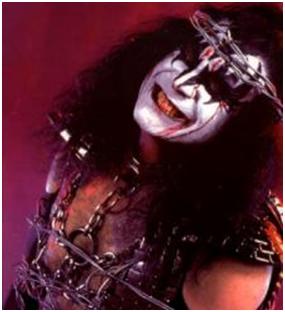 After months of rehearsals the band was ready to perform live. Borrowing a leaf from the pages of several other New York bands KISS started experimenting with makeup. After soon realising that a feminine appearance would in no way suit what KISS was trying to bring to the stage it was decided that they would go to the extreme – each member would come up with a unique style of makeup suiting their distinct personality, makeup that would be worn every time the band performed.
Gene’s KISS character was The Demon, and his bat-like makeup allowed him to act out all of the characters that had enchanted him as a child. As soon as the band stole the media spotlight Gene has always been the most photographed member, and his on-stage fire-breathing, tongue-waggling and blood drooling have made headlines everywhere. More information on the makeup and costumes can be found in the Man of 1,000 Faces section of the Radioactive website.
After three albums with a less-than-lukewarm response, it was decided to record KISS’ already phenomenal live show, and the double album Alive! was a bigger hit than anyone had ever imagined, ultimately going quadruple platinum. The Simmons-Stanley composition that let the public know KISS’ prime objective, “Rock and Roll All Nite”, was written primarily as a ‘battlecry’ for the band and its fans to believe in.
“There was a sense of belonging …’us’ against ‘them’ … so we thought why not write a rock’n’roll manifesto?
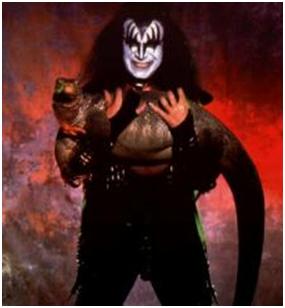 After five years of tremendous musical success, sold out tours, and phenomenal album sales, problems within KISS led to the realisation of the Solo Albums. This unique concept would allow each member his own space while they each created an album individually. More information on the Gene Simmons album can be found in the Great Expectations section of the Radioactive website.
KISS decided to remove their trademark makeup in 1983. This would prove to be a make-or-break situation for the band, as for the most part music consumers had grown tired of this aspect of the band, and it had arguably got to the point where people were actually avoiding their music because of it. In September 1983 the band appeared ‘unmasked’ on MTV, and from then on Genes role in the band would be different – he could no longer be the blood spewing monster running wild on the stage, and this change would take a while to get used to.
“When we didn’t wear make-up, though the rest of the guys were more comfortable with it, I was most uncomfortable because I was going through the motions and trying to be what I wasn’t… the sort of ‘pretty boy’ thing.”
During t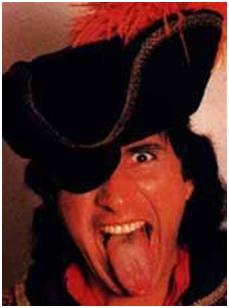 he course of the mid to late 1980’s Gene was busy with things not completely related to the band that he had helped propel into superstardom. Once he had achieved his dream of being a musician he decided to pursue other goals, and began accepting Hollywood acting deals in 1984.
As well as producing albums by Black ‘n Blue, Wendy O. Williams and other artists, Gene launched his own record label, the inventively titled SIMMONS RECORDS. Gene also signed a deal with KISS’ management to jointly manage the career of jazz singer Liza Minelli, which lasted several years.
More information on production, the record label and Gene’s Hollywood career can be found in their own sections of the Radioactive website.
With the release of the aggressive Revenge album in 1992, Gene confessed that for the previous decade he had not been investing his full effort into his band, and owing to his other pursuits KISS had suffered. For the first time since 1983 Gene got back to penning his trademark heavy and 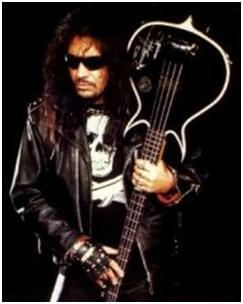 aggressive songs. The world tour promoting this album would witness a more aggressive look and nature from Gene – he wore a moustache and goatee, and the colourful clothes worn on tours in the eighties were replaced with black leather and studs, and by his own admission he was finally fully comfortable on stage without makeup.
“Revenge is probably the most satisfying record I’ve worked on since Creatures.”
The KISS performance on MTV Unplugged in August 1995 saw the reunion of the four original members of the band, and the Alive-Worldwide tour announced in early 1996 saw a return to the outrageous makeup and costumes from the mid 70’s.
“This tour and the whole event really is a culmination of more than a decade of fans being on our asses, saying we have to do it.”
The Demon was reborn, and once again Gene Simmons confounded the critics and regained his position at the top of the music industry. The Alive-Worldwide tour went on to be the top grossing tour of ’96-’97, and brought KISS more than anyone could have ever expected.
March 1999 saw Gene going where few men had ever set foot before – the cover of Playboy magazine. Touted as the ‘Sex and Music’ issue, it featured shots of band members alongside the twenty “Girls of KISS” who wore makeup and, well, very little else…
The film Detroit Rock City, released August ’99 in the US 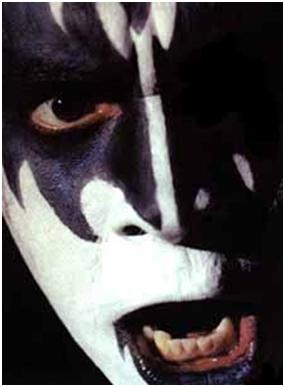 saw Gene tackling the role of movie co-producer, as well as making a guest appearance with the rest of the band in the explosive finale. More on Detroit Rock City in the Watchin’ You area of the Radioactive website.
What is next for Gene Simmons? We can only speculate.
While the KISS “Farewell Tour” has been recently announced, many people are convinced that it is only the original lineup of the band that is finishing touring. Others hold steadfast to their belief that the end of KISS as a band is finally over.
Will we see Gene moving back into the motion picture industry? Producing new bands? Releasing a solo album?
Certainly I can’t tell you all of the answers, but I can assure you that I will be one of the many watching as the history of the man who embodies the American Dream continues to unfold.
|
THANKS
|
|
Many thanks to Mick from Radioactive for the use of this article and his pictures.
|
|
OTHER LINKS
|
|
Ace Bio
—
Peter Bio
—
Paul Bio
—
Bruce Bio
—
Eric C Bio
—
Eric S Bio
—
Vinnie Bio
—
Mark Bio
|


 JOHN RUBENS is no Mother Teresa.